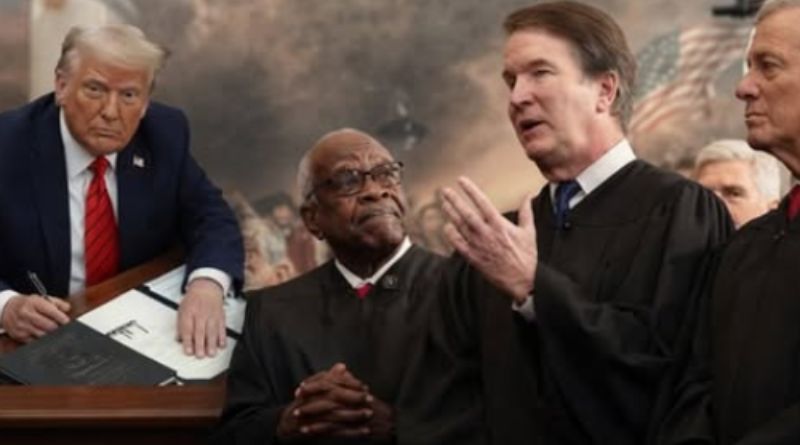
Justice Clarence Thomas is not known for speaking often during U.S. Supreme Court oral arguments, but when constitutional issues arise, he has a reputation for responding forcefully. That approach was evident Tuesday when he criticized the court’s refusal to hear a lawsuit filed by Florida against California and Washington.
Florida argued that the two states violated federal immigration and commercial trucking regulations by issuing commercial driver’s licenses to undocumented immigrants who allegedly did not meet federal standards requiring English proficiency and lawful immigration status for certain drivers. State officials claimed those policies created risks to public safety and contributed to deadly accidents on American highways.
Thomas, joined by Justice Samuel Alito, said the Supreme Court had a constitutional duty to hear the case because disputes between states fall under the court’s original jurisdiction and cannot be brought elsewhere.
“If this Court does not exercise jurisdiction over a controversy between two States, then the complaining State has no judicial forum in which to seek relief,” Thomas wrote.
He emphasized that only the Supreme Court can resolve lawsuits between states, making the court’s decision especially significant.
Thomas also pointed to a fatal Florida crash involving truck driver Harjinder Singh, arguing that failures to enforce federal licensing rules can have deadly consequences. He noted that federal law requires commercial license applicants to pass driving tests, understand English sufficiently, and provide appropriate immigration documentation.
Thomas further argued that while the court has discretion over many appeals, interstate disputes are different because the Constitution assigns those matters directly to the high court. Critics of the decision argue Florida now has no remaining legal avenue to pursue its claims. Supporters of Thomas’s position contend the ruling weakens the court’s responsibility to settle conflicts between states, while opponents may view the case differently on legal grounds.