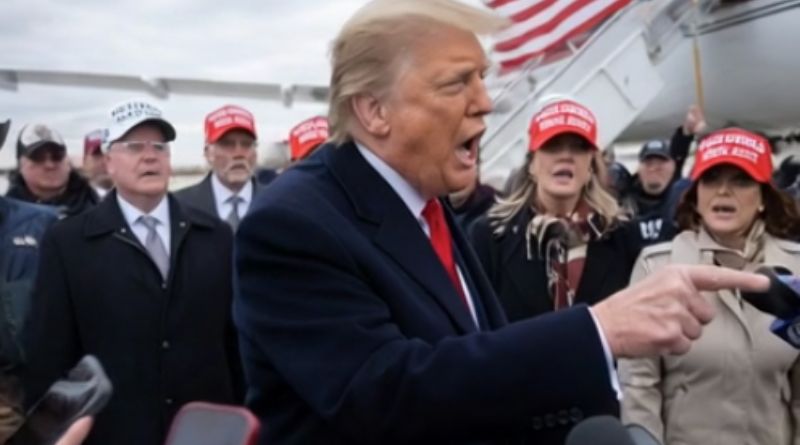
A longtime federal judge appointed by former President Ronald Reagan has stepped down from the bench, saying he wants the freedom to speak publicly about concerns he has regarding President Donald Trump and the state of the American legal system.
Former U.S. District Judge Michael Wolf explained that his decision to resign was driven by a desire to openly address what he views as threats to judicial independence. In a public statement, Wolf said he could no longer remain silent while, in his view, the legal system is being used for political purposes.
Wolf argued that the administration has treated political allies and opponents differently under the law, a development he said conflicts with the principles he followed throughout his decades of public service. He noted that he began his career at the Department of Justice in 1974, shortly after the Watergate scandal, and said that experience shaped his belief in a nonpartisan justice system.
The former judge also praised former Attorney General Edward Levi, who served during the Ford administration, for influencing his understanding of the rule of law. After taking senior status in 2013, Wolf’s seat was later filled by Judge Indira Talwani, who was nominated by President Barack Obama.
In interviews following his resignation, Wolf said he hopes to serve as a public voice for judges who feel restricted by judicial ethics rules from speaking candidly about political developments.
The White House strongly rejected Wolf’s criticism. Spokeswoman Abigail Jackson said judges should not allow personal political views to influence legal decisions. She also pointed to numerous court victories by the Trump administration, arguing that many of its policies have been upheld despite legal challenges.
Meanwhile, attention is turning toward the upcoming midterm elections. Republican National Committee Chairman Joe Gruters recently claimed Republicans could hold a significant fundraising advantage over Democrats. He suggested conservative groups may collectively have hundreds of millions of dollars available for campaign efforts, potentially reshaping the financial landscape ahead of November’s contests.
The developments highlight growing political and legal tensions as the election season approaches.